Valoramos su privacidad.

Utilizamos cookies para analizar el rendimiento del sitio y mejorar su experiencia. Puede aceptar o rechazar las cookies. Para obtener más información, consulte nuestra Política de cookies.

IV Call for Startups

Sustainability, Accessibility, Customer Experience, Digitalisation of Freight Transport, Future Railway Maintenance, and Operational Safety

Challenges

Sustainability Challenge

Rail is the mode of transport for passengers and freight with the lowest overall environmental impact. We are the best mobility alternative in the fight against climate change. Renfe is the leading consumer of renewable electricity in Spain, as 80% of our train traffic is powered by renewable energy. We contribute to preventing the increase in the average global temperature. But all this is not enough; we want to go further in sustainability.

With the aim of consolidating and strengthening Renfe's role as a sustainability provider, we are seeking technological solutions that will allow us to advance the strategic lines on which Renfe is working: energy management, energy efficiency, decarbonization, and raising awareness among different stakeholders.

Illustrative examples of potential solutions:

  1. Solutions that engage and raise customer awareness about reducing their carbon footprint, not only during the train journey but also throughout their entire trip.
  2. Solutions for reducing the carbon footprint in last-mile delivery.
  3. Development of intermodal technologies that promote rail as the most sustainable option for freight transport.
  4. Development of energy management systems that optimise energy use and generation within the rail system.
Winning Startup

Accessibility Challenge

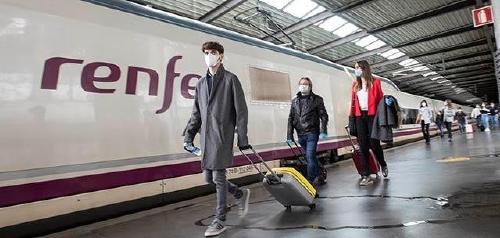
At Renfe, we understand accessibility as a commitment we make directly to society to improve performance and enhance the quality of our transport services. The removal of barriers in transportation that we have undertaken in recent years leads to universal transportation, for everyone, characterised by the creation of accessible environments.

Our approach to accessibility is comprehensive and cross-cutting; we want to improve accessibility in all the activities a person undertakes throughout the journey.

We intend to foster the development of the most revolutionary digital projects focused on improving universal accessibility in its three dimensions (physical, sensory, and cognitive). The goal is to enhance the customer experience, facilitating accessible travel for all.

Illustrative examples of potential solutions:
  1. Solutions that facilitate accessibility at any point in the customer journey and that can be adapted to the customer profile.
  2. Accessibility solutions for communication and information so that people with special needs can obtain information and travel by train with complete confidence.
  3. Solutions that allow all customers to access services in an integrated way, regardless of special needs such as reduced mobility, hearing, visual, or cognitive impairment.
  4. Solutions that provide customers with real-time information on accessibility along their entire route, with different alternatives in case of breakdowns, incidents, or connections that impact the accessibility of the planned route.
  5. Technical solutions to eliminate accessibility deficiencies at a structural level.
  6. A customer location system for customers with special needs that allows for real-time tracking of the services offered.
Winning Startup

Customer Experience Challenge

One of the pillars of the Renfe Group's Strategic Plan is to place the customer at the heart of our business, redefining our products based on their characteristics to improve the experience and attract new customers.

Therefore, we want to establish new, personalised communication channels with our customers at all times, whether for short, commuter, medium-distance, or long-distance journeys, understanding their needs, preferences, and opinions, and proactively providing them with accurate, up-to-date, and personalised information about their trip, precisely when they need it.

We are looking for technological solutions that will facilitate an improved customer experience and allow us to personalise and enhance our communication and understanding of our customers.

Illustrative examples of potential solutions:

  1. Customer experience improvement tools that can be integrated into Renfe's existing apps or channels.
  2. Two-way communication tools with customers through an app-based reporting system, allowing them to easily and quickly report breakdowns at stations or on trains.
  3. Solutions for automation, ease of access, and speed in customer interaction through an omnichannel model for digital customer relations, where the integration of different channels allows customers to use any of them and even switch between them.
  4. Improvements to the signage and wayfinding system in stations and trains, for example, through solutions that inform customers of the location of train access points on platforms.
  5. Personalised information solutions tailored to the customer's needs at any given moment, through a travel assistance and information system (delays, connections, train departure platforms, and the location of the assigned car).
  6. Solutions that enable mass customer personalisation through the automated capture and analysis of the Voice of the Customer (VOC), the definition of the Customer Journey Map, archetypes, etc.
  7. Solutions that allow for the real-time measurement of customer emotions using new technologies.
Winning Startup

Freight Transport Digitalisation Challenge

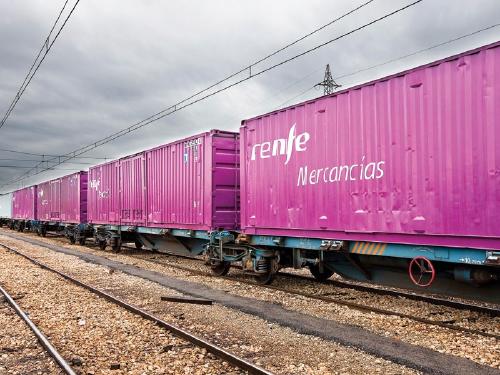
At Renfe Mercancías, we provide a comprehensive rail logistics operator service, capable of managing or participating in any integrated logistics chain, both national and international. All of this is based on the principle of safety, with a clear customer focus, and criteria of quality, efficiency, profitability, and innovation, striving to increase rail's market share, based on a commitment to society and the development of our employees.

However, in recent years, the freight transport and logistics sector has undergone a significant transformation. The competitive advantages of new digital technologies are transforming production processes and the relationship between companies and their customers, creating new opportunities, disruptive products, and innovative business models.

We seek transformative, innovative, and technological solutions that support the digitalisation of rail freight transport as a means to achieve operational excellence, improved profitability, and increased competitiveness.

Illustrative examples of potential solutions:
  1. Tools for optimising logistics resources and routes to assist in traffic planning and flow management by handling incidents based on relevant criteria at any given time (cost/delay reduction, increased efficiency/quality).
  2. A traffic simulator to estimate profitability based on train configuration.
  3. Solutions for building a comprehensive multimodal logistics platform to attract industrial clients and market logistics spaces associated with rail.
  4. Optimisation of operational processes at terminals (checking the condition of pins, brake shoes, and train formation, brake testing, etc.), for example, through the automation of visual inspections of freight trains.
  5. Digital solutions for the timetable, providing the train driver with all the necessary information about the route and track, based on location and in real time.
  6. Interpretation technology solutions for operational staff to facilitate internationalization.
  7. Robotisation of terminal operations (switch movements, etc.).
  8. Tools to calculate railcar parameters (weight, height, etc.).
Winning Startup

Operational Safety Challenge

Safety and Safety Culture occupy a prominent place in our 2019-2023-2028 Strategic Plan, serving as fundamental pillars for Renfe and key elements for business development. Safety is an unquestionable value for Renfe, and for this reason, to move forward, it is essential to implement actions that allow us to transform and strengthen it.

We were seeking digitalisation solutions in operational safety with the aim of providing Renfe with technological improvements and innovation in its systems through the strategy of implementing active and proactive safety in all its processes.

Illustrative examples of potential solutions:

  1. Development of a real-time data capture and analysis system in the cab using sensors and cameras to assist driving, for example, in detecting fatigue or drowsiness while driving.
  2. Development of geospatial communication systems to improve existing support and speed monitoring systems during operation and approach to critical points (switches, signals, station stops, buffer stops). For example, a predictive system for overtaking when approaching a stop signal.
  3. Interactive solutions to improve real-time information for passengers, enabling communication of, for example, high occupancy on trains and in stations, emergency or incident alerts, etc.
  4. Digitisation and automation of real-time data transfer from in-cab systems, such as data from the legal recorders installed on Renfe's locomotives, with the aim of developing real-time security and maintenance monitoring services.
  5. Image monitoring and analysis systems for identifying hazardous situations in railway environments, such as level crossings, platform crossings, passenger boarding and alighting, and track access, integrated into control and alarm systems.
  6. Development of data analysis systems based on neural networks that, through the analysis of internal data (operational and safety levels) and external data (economic, meteorological, social, etc.), enable the generation of safety predictions to anticipate potential negative events.
  7. Solutions aimed at improving human resource management in the field of operational safety.
  8. Neural network analysis of video images for the analysis of risk situations in railway environments.
Winning Startup

The Future of Railway Maintenance Challenge

Renfe Manufacturing and Maintenance's vision for the future involves a technological, operational, and cultural transformation that will change how work is currently done, increasing agility and efficiency in processes, extracting greater value from data, and facilitating operational interventions.

Adapting the various maintenance processes to the Industry 4.0 paradigm has become one of the main challenges. The digital transformation of maintenance must be able to align versatility, responsiveness, and product quality in an interconnected environment equipped with new smart technologies, with the aim of optimising maintenance management and facilitating decision-making.

We are looking for innovative technology projects in the field of railway manufacturing and maintenance, focused on digitalisation and the incorporation of new Industry 4.0 technologies (IoT, Big Data, augmented reality, additive manufacturing, machine vision, etc.).

Illustrative examples of potential solutions:
  1. Solutions that facilitate data capture by operators in production processes (maintenance, inspection sheets, controls, etc.) using voice recognition technologies, cognitive automation data capture, robotic process automation, etc.
  2. Facility monitoring systems (maintenance bases) that allow for monitoring the status of key components and enabling rapid response in case of breakdowns thanks to a self-diagnostic system.
  3. Digital twin implementation solutions that allow for the optimisation of railway maintenance bases.
  4. Sensor and IoT connectivity solutions for implementing predictive maintenance for all rolling stock (locomotives, freight cars, and commuter/medium-distance and long-distance trains).
  5. Augmented reality solutions to support work in workshops.
  6. Automated solutions for the visual inspection of trains in workshops, recording relevant information and detecting defective parts.
Winning Startup

Do you have any questions?

Other Calls